

Building Reliable Financial Capacity Seminar
Leading Without the Full Picture
Restoring the financial clarity that confident decisions depend on.
A live, virtual training seminar to foster financial wellbeing in the social purpose sector.
Seminar Overview
You’re making high-stakes decisions every week, about funding, staffing, programs, and strategy. How often are you making them with the financial information you actually need? This three-hour seminar helps you find where your visibility breaks down, and gives you working tools to close the gap.
Grounded in Humanity Financial’s Five Stages of Financial Wellness™ framework, participants will examine where financial information breaks down in their own organizations, identify their highest-risk blind spots, and leave with ready-to-use templates and a concrete action plan they can implement immediately.
When money tightens, what actually holds?
When reports arrive late, cash flow visibility ends at next Tuesday, or critical financial knowledge lives in one person’s head, every decision gets harder. Funding cuts don’t create these conditions. They expose them.
This is not a workshop on building budgets or cash flow projections. It is a leadership session on the financial architecture that makes good decisions possible.
Who should attend:
- Executive Directors, CEOs, board members, treasurers, finance managers, controllers, and nonprofit leaders responsible for programs, operations, funding, or reporting.
 |
THIS SESSION IS FOR YOU IFYou recognize this:
YOU WILL LEAVE WITHTools you can use right away:
|
Seminar Overview
You’re making high-stakes decisions every week, about funding, staffing, programs, and strategy. How often are you making them with the financial information you actually need? This three-hour seminar helps you find where your visibility breaks down, and gives you working tools to close the gap.
Grounded in Humanity Financial’s Five Stages of Financial Wellness™ framework, participants will examine where financial information breaks down in their own organizations, identify their highest-risk blind spots, and leave with ready-to-use templates and a concrete action plan they can implement immediately.
When money tightens, what actually holds?
When reports arrive late, cash flow visibility ends at next Tuesday, or critical financial knowledge lives in one person’s head, every decision gets harder. Funding cuts don’t create these conditions. They expose them.
This is not a workshop on building budgets or cash flow projections. It is a leadership session on the financial architecture that makes good decisions possible.
Who should attend:
- Executive Directors, CEOs, board members, treasurers, finance managers, controllers, and nonprofit leaders responsible for programs, operations, funding, or reporting.
THIS SESSION IS FOR YOU IF
You recognize this:
- Your board is asking financial questions you can’t answer quickly.
- Reports arrive late, unclear, or hard to use.
- Cash flow visibility ends at the next two weeks.
- Critical financial knowledge depends on one person.
- You are making funding, staffing, and program decisions without clear numbers.
YOU WILL LEAVE WITH
Tools you can use right away:
- A diagnostic to locate where your financial visibility breaks down.
- Working templates for cash flow, monthly reporting, compliance tracking, and budgeting.
- Your organization’s location on the Five Stages of Financial Wellness™ map.
- One priority action and one important conversation, planned for the coming week.
- A complete resource pack designed to be implemented immediately.
Seminar Learning Objectives
By the end of this session, participants will be able to:
1. Reframe financial crisis as a visibility problem, not a funding problem.
Understand why the real risk in a financial crisis is not the absence of money but the absence of reliable information — and why this distinction changes what you do first.
2. Identify their organization’s highest-risk financial blind spots.
Use a structured diagnostic to locate where financial information breaks down, where decisions are being made without clarity, and where one person holds critical knowledge.
3. Apply practical tools that stabilize financial operations immediately.
Work with ready-to-use templates — including cashflow visibility, monthly reporting, compliance tracking, and budget frameworks — designed to be implemented right away, not after months of preparation.
4. Understand where financial crisis sits within a larger developmental journey.
Locate their organization within the Five Stages of Financial Wellness™ framework and understand why sequencing matters — why what you build first determines whether everything else holds.
5. Leave with a prioritized action plan and a resource toolkit.
Commit to one immediate action, identify one conversation they need to have, and take away a complete set of Stage 1 tools ready for use in their organization.
Presented By Humanity Financial Management
B Corp · Benefit Corporation · Bronze PAIR Certified
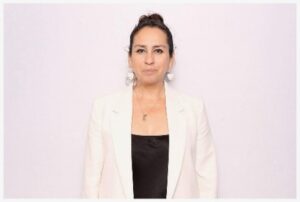 |
Pamela Oliva, CEO, Humanity Financial Management Inc.Pamela Oliva is the CEO of Humanity Financial Management, dedicated to advancing financial wellness, governance capacity, and long-term sustainability for nonprofits, charities and First Nations organizations. As an FCPA (Aus) with nearly three decades of experience, Pamela works at the intersection of finance, governance, and community development. She challenges the notion that accounting is neutral, instead treating it as a system of meaning-making that shapes power, accountability, and decision-making. Before joining the firm in 2023, Pamela had worked internationally, in a cross cultural context, as CFO for nearly 20 years. She has also dedicated her time to serving on numerous nonprofit Boards in both Canada and Australia. Pamela is recognized for translating complex financial information into practical, values-aligned tools that build internal capacity and confidence. Her work emphasizes relational trust, ethical practice, and durable systems that support self-determination rather than dependency. Pamela is mother to three children and lives in Moh’kinstsis, the Blackfoot name for the area commonly known as Calgary. |
 |
|
Gordon Holley, Co-founder & Advisor, Humanity Financial Management Inc.Gordon Holley is a Co-founder and Advisor at Humanity Financial Management (HFM). HFM is a licensed, remote CPA firm, unique in the financial services sector, implementing strategies that facilitate improvements in the financial health and wellness of their social purpose clients, enabling them to better deliver on their unique and crucial missions. HFM works exclusively with organizations that are trying to make the world a better place. Gordon spends much of his time volunteering. He has over 50 years of cumulative board experience. He is currently Board Chair at Community Foundations of Canada, and also serves on the boards of AFOA BC, B Local Vancouver, Vantage Point and the Paypal Giving Fund Canada, in the Treasurer role. He is also on the audit and finance committee for AFOA Canada. Gordon and his wife Megan, started HFM to support the social purpose sector in Canada, recognizing that many social purpose organizations struggle with financial management and financial governance. HFM provides part-time controllers and consulting CFOs to supplement or build the capacity of internal finance departments. The team has grown to over 35 FTE, mostly licensed CPAs. HFM has developed a proprietary theory of change for their clients called the Five Stages of Financial Wellness for Social Purpose Organizations. The five stages are 1) Financial Crisis, 2) Financial Fragility, 3) Financial Stability, 4) Financial Strength, and 5) Financial Abundance. The firm works alongside its clients to help them progress through the five stages and work toward financial abundance so that they can better achieve their missions. Gordon lives in West Vancouver with his wife Megan and their dog, Rosie, and has two adult daughters. |
About the Seminar
registration closed!
|
|
Where: VirtualWhen: May 20, 2026 |

|
|
Time: 1 pm (EST)Length: 3 Hours |