


If you’ve noticed fewer job postings, longer hiring timelines, and radio silence after interviews, you’re not imagining it.
The summer months often bring a noticeable slowdown in recruitment. Hiring managers take vacations, interview schedules become harder to coordinate, budgets are reviewed before the fall hiring season, and decision-making naturally takes longer.
For many job seekers, this creates the perfect recipe for discouragement.
You spend hours applying for positions only to hear nothing back. Weeks pass between interviews. You begin questioning your qualifications when, in reality, the market has simply shifted.
Here’s the good news.
A slower hiring season doesn’t mean your job search has to come to a standstill. In fact, summer is one of the best opportunities to strengthen the parts of your job search that are often overlooked when you’re busy submitting applications.
Instead of measuring success by the number of jobs you apply for, focus on building a stronger foundation for the opportunities that will come in the fall.
1. Reconnect before you need something
One of the biggest mistakes I see job seekers make is only reaching out to their network when they need help.
Networking works best when relationships already exist.
Summer is an excellent time to reconnect with people you’ve worked with throughout your career. Think about former managers, supervisors, colleagues, professors, classmates, mentors, and peers.
You don’t always need an agenda.
A simple message asking how they’ve been, congratulating them on a recent promotion, or sharing something that reminded you of them can reopen conversations naturally.
These warm connections already know your work ethic and strengths. When opportunities arise, they’re much more likely to think of someone they’ve recently heard from than someone they haven’t spoken to in five years.
Networking isn’t about collecting contacts.
It’s about maintaining relationships.
2. Spend less time applying and more time being intentional
During slower hiring periods, it’s tempting to apply for every role you see.
Ironically, this is often when you should be doing the opposite.
If fewer positions are being posted, use the extra time to strengthen your strategy instead of increasing your application count.
Map out organizations you’d genuinely like to work for.
Identify professionals whose careers inspire you.
Research leaders in your field.
One trend I’ve noticed over the past year is that informational interviews and coffee chats have become increasingly difficult to secure. Many leaders receive multiple requests every week, and understandably, they don’t have the capacity to say yes to everyone.
The professionals who stand out are the ones who demonstrate genuine interest before asking for someone’s time.
Have they written an article recently?
Were they featured on a podcast?
Did they speak on a panel or present at a conference?
Read their work. Listen to the podcast. Engage thoughtfully with their content on LinkedIn. Share something meaningful that resonated with you.
When you eventually introduce yourself, you’re no longer another person asking for a coffee chat. You’re someone who has taken the time to understand and appreciate their work.
Relationships built on genuine curiosity are far more meaningful than relationships built solely around job searching.
3. Get clear on your personal brand
One of the questions I ask nearly every coaching client is:
“What are you looking for next?”
You’d be surprised how often people struggle to answer.
If you’re not clear on your career direction, it’s difficult for anyone else to help you.
The summer months naturally bring more social gatherings, family events, weddings, barbecues, and vacations. These settings often lead to conversations about work and career goals.
Instead of saying,
“I’m looking for anything.”
Try saying,
“I’m looking for project management opportunities within healthcare,”
or
“I’m hoping to transition into employee experience and organizational development.”
The clearer you are about your goals, the easier it becomes for the people around you to connect you with relevant opportunities.
This is where personal branding becomes so important.
Your personal brand isn’t just your LinkedIn profile or your résumé.
It’s the story people remember about you.
Can you clearly explain the value you bring?
Can you articulate the problems you solve?
Can you confidently describe the type of opportunity you’re seeking?
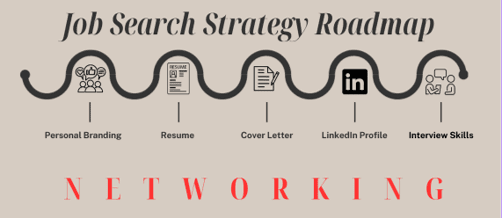
When your message is consistent across your résumé, LinkedIn profile, networking conversations, and everyday interactions, people begin to understand exactly how they can support you.
Keep building momentum
While summer may not be the busiest hiring season, it can be one of the most valuable seasons for career development.
The professionals who use this time intentionally often enter September with stronger networks, clearer goals, and a more compelling personal brand.
When hiring begins to accelerate again, they aren’t starting from scratch.
They’re ready.
Sometimes the most important work in your job search isn’t submitting another application.
It’s becoming someone who is easier to discover, easier to recommend, and easier to remember.
By Sonia Sheechoria, BHRM ’15, MLCE ’19, Career & Interview Coach
The views expressed in this article are the author’s alone and do not necessarily represent those of CharityVillage.com or any other individual or entity with whom the authors or website may be affiliated. CharityVillage.com is not liable for any content that may be considered offensive, inappropriate, defamatory, or inaccurate or in breach of third-party rights of privacy, copyright, or trademark.
