
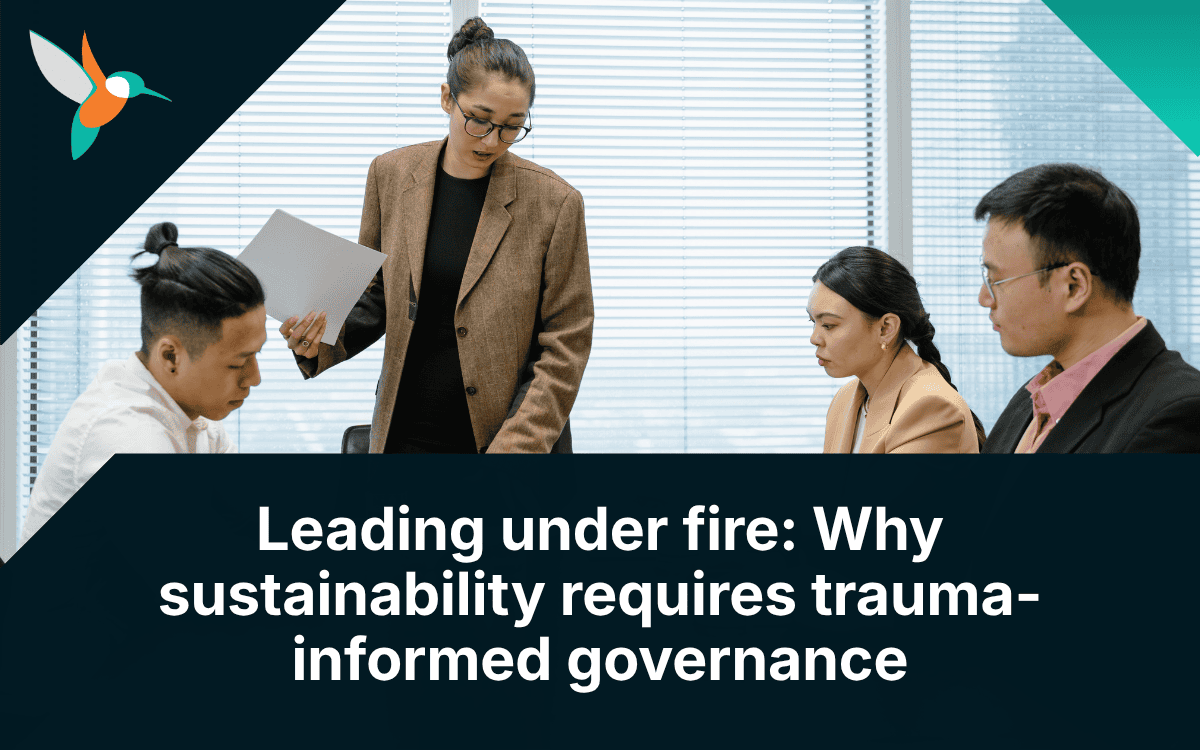

In the nonprofit sector, leadership is often tested under pressure. Leaders are expected to deliver results, manage limited resources, support staff, and respond to growing community needs. In this context, trauma-informed leadership is sometimes misunderstood as soft or optional. In reality, it is one of the most practical and strategic leadership approaches available today.
Many nonprofit organizations operate in constant high-stress environments. Funding uncertainty, heavy workloads, and exposure to crises are common.
These conditions affect how people think, communicate, and make decisions. When leadership does not account for this reality, organizations often experience high turnover, internal conflict, and burnout. Trauma-informed leadership helps leaders respond to these challenges with clarity and consistency, rather than urgency alone.
Trauma-informed leadership starts with understanding how stress impacts behaviour and performance. Under pressure, people may struggle with focus, communication, and emotional regulation. This is not a lack of commitment or skill. Leaders who recognize this are better equipped to design systems that support performance instead of unintentionally creating more strain.
For many Black leaders, women founders, and community-based executives, trauma-informed leadership is not theoretical. It is practiced daily. These leaders often build organizations while navigating funding barriers, high expectations, and personal exposure to community trauma. As a result, many have developed leadership approaches that prioritize clarity, boundaries, and consistency, not as a wellness concept but as a necessity for survival and sustainability.
From an organizational perspective, trauma-informed leadership strengthens governance. Clear roles, predictable processes, and transparent decision-making reduce confusion and risk. When expectations are consistent, staff are more confident in their work, and leadership teams are better able to manage change. These practices support accountability and long-term organizational stability.
Decision-making is another area where trauma-informed leadership adds value. In high-pressure situations, leaders are often required to act quickly. Without structure, decisions can become reactive or inconsistent. Trauma-informed leaders create clarity before action. This leads to better judgment, stronger outcomes, and fewer unintended consequences.
Staff retention remains a major concern across the nonprofit sector. Many professionals leave, not because they lack passion for the mission, but because leadership environments feel unpredictable or unsupported. Trauma-informed leadership creates work environments where communication is clear, and leadership behaviour is steady, especially during periods of change. This sense of stability plays a key role in retaining skilled staff.
It is important to clarify what trauma-informed leadership is not. It is not therapy in the workplace. It does not avoid accountability or difficult conversations. It does not lower expectations. Instead, it allows leaders to hold expectations in a way that is fair, consistent, and sustainable.
In practice, trauma-informed leadership looks like clear communication during stressful moments, policies that protect staff as well as clients, and leaders who model calm rather than urgency. It includes setting boundaries around workload, decision-making, and availability. These practices support stronger teams and healthier organizations.
Trauma-informed leadership belongs alongside other core leadership tools, such as financial oversight, succession planning, and risk management. It is not an add on, it is part of building an organization that can operate effectively in complex environments.
As the nonprofit sector continues to face increasing demands, leadership approaches must evolve. Relying on resilience alone is no longer enough. Leaders need strategies that support both people and performance.
Trauma-informed leadership is not soft leadership. It is strategic leadership.
Meseret Haileyesus is the CEO of the Canadian Centre for Women’s Empowerment (CCFWE), a multi award winning economic security futurist, and the first recognized Canadian leader to bring economic harm into public discourse and advance it as a national policy priority.
The views expressed in this article are the author’s alone and do not necessarily represent those of CharityVillage.com or any other individual or entity with whom the authors or website may be affiliated. CharityVillage.com is not liable for any content that may be considered offensive, inappropriate, defamatory, or inaccurate or in breach of third-party rights of privacy, copyright, or trademark.
