


Worldviews shape how we make sense of ourselves and others in the world and, as such, they are strong determinants of our behaviours and actions in the workplace. Our worldviews can align with others or, in some cases, be divergent.
Consider this scenario, for example. One employee arrives at their workstation fighting a bit of a cold, so as a courtesy, they put on a medical mask and then proceed to spray a disinfectant cleaner on the equipment in their work area to help protect their co-workers and prevent the spread of germs. This enrages a nearby co-worker, however, because they don’t view this as a preventative health measure. Rather, they view this as the spreading of a toxic and dangerous chemical in the workplace, and they insist that the other person stop immediately because they don’t want to be poisoned.
Or consider this example. Two people are working on a major project proposal to meet an upcoming funding deadline. One insists on undertaking extensive consultations with all stakeholders and ensuring that their input is directly factored into the project’s design. This could end up taking months, thus impacting their ability to complete the proposal on time. Whereas the other person, who is working on the proposal, has seen funding deadlines missed in the past because the organization has gotten bogged down in what they consider to be endless consultation processes. One views their task from an urgent and opportunistic frame of reference that requires speed and dexterity, while the other sees a need for slow, meaningful, and deliberate engagement to produce a high-quality proposal.
Both examples illustrate how differing worldviews can impact working relations. What exactly is a worldview, however?
What worldviews are made of
A worldview is made up of things such as persons, places, ideas, thoughts, beliefs, and values. Moreover, we have an emotional response to these things. That is, we can have positive feelings towards some concepts and negative feelings towards others. Additionally, maybe we don’t feel strongly about some of them, so we view them in neutral terms, or we might even feel unsure or ambivalent about others.
Importantly, these concepts are interlinked, where one idea leads to another. So, when we think of the concept of efficiency, for example, we might think of other connected ideas such as productivity, increased revenues, reduced waste, and eliminating redundancy.
So, if divergent worldviews can exist in the workplace and these worldviews are composed of different interlinked concepts plus our emotional reactions to each one, how do we translate that into practical and actionable steps in the workplace to bridge worldviews?
Having courageous conversations
Well, if we take the second example, it speaks to the need to have a conversation about “what” we have to do and “how” we do it. In other words, what is important to us? What are the values that we bring to the process? Do we value stakeholder engagement more than meeting a deadline? The answer to these questions would address both the what and how of creating a new project proposal.
These are difficult conversations, however, because they demand that we be open, honest, and transparent about who we are and what’s of value to us. They require courage, in other words.
To have these difficult conversations and to learn how others see the world, we have to find ways to turn them into us. Part of the answer is curiosity. Curiosity is key. If we are shut off from ourselves and others, we simply cannot connect.
How can we promote openness and curiosity at both the personal and organizational levels? We need to start by recognizing differences, which can exist on a spectrum from basic tolerance to open acceptance to full-on celebration of differences.
Moving beyond curiosity, however, there’s also language. Language shapes reality. Is someone who finds a way to speed up a process being lazy, or are they being efficient, for example? The key is to use language that doesn’t further alienate others. Rather, we need to use language that creates connections.
Everyone’s worldview is equally valid
We also have to recognize that other people’s worldviews are as valid and true to them as mine are to me. Think of the story of three blindfolded people who’ve never seen an elephant before. The person who touches the trunk says an elephant is like a big snake. The person who is near the leg says the elephant is strong and mighty, like a giant tree. The person who touches an ear says an elephant is broad, thin and has many intricate ridges.
All three perspectives are equally correct, yet none is fully factual about the entirety of the elephant. This doesn’t mean one perspective is better or worse than the others, but it might suggest that having a holistic viewpoint could be helpful.
For me to appreciate that my worldviews are equally as valid as other worldviews, it can be helpful to have emotional intelligence training and to recognize that perhaps I can allow for the possibility of multiple truths to all co-exist at the same time and that my view is not the one and only correct one. This demands openness and flexibility.
Creating connections across worldviews
So, to recap, to bridge divergent worldviews, we must:
- be curious and courageous
- connect with others using language that doesn’t alienate and/or divide
- recognize difference – and perhaps even aim to celebrate it
- be aware of who we are and how our actions impact others
- recognize that my worldview is as true to me as others’ are to them
While none of this is easy work to undertake, the potential benefits are huge: when values align in a workplace, it can foster trust and help create an overall much stronger workplace culture!
Do you have the courage to become an explorer of your and others’ worldviews?
Dr. Evan Hoffman offers workshops and coaching on navigating divergent worldviews through www.ConflictDoctor.ca
Evan Hoffman, PhD ~ “The Conflict Doctor”
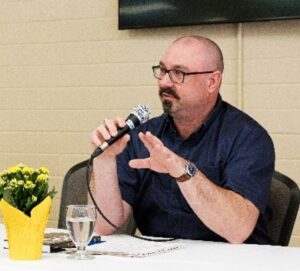
Evan Hoffman, PhD is a conflict resolution specialist with over 25 years of experience. Evan has led and supported initiatives that strengthen communication, trust, and collaboration across sectors—from social service agencies and Indigenous organizations to international institutions such as the UN and Global Affairs Canada.
Today, Evan combines his experience as an educator and practitioner to help others build resilient relationships and manage conflict constructively. Whether working with front-line staff, managers, or community leaders, he focuses on developing the skills and confidence people need to respond to conflict with compassion and effectiveness.
More info about his background and current work can be found on his LinkedIn page.
The views expressed in this article are the author’s alone and do not necessarily represent those of CharityVillage.com or any other individual or entity with whom the authors or website may be affiliated. CharityVillage.com is not liable for any content that may be considered offensive, inappropriate, defamatory, or inaccurate or in breach of third-party rights of privacy, copyright, or trademark.
