

In 2010, when the Foundation of Greater Montreal (FGM) released their Vital Signs report, they informed a donor who held a particularly large fund with them that addressing steep high school dropout rates had been revealed as a pressing issue.
There was a serious need to fund education programs that could help retain students — particularly those in lower-income areas.
The donor, whose previous contributions had been directed exclusively at hospitals, took the FGM’s words to heart.
At their suggestion, he and his wife decided to fund an afterschool music program — including the provision of all the instruments — at what was considered one of the most vulnerable high schools in Montreal. After attending a concert put on by the students, the donor independently decided not only to double his donation the following year, but to fund a student-run school snack bar, where students could learn on-the-job entrepreneurial skills.
The results were tangible; as of this year, the high school’s dropout rates have decreased by about 20%.
“It’s a turnaround success story,” says Marina Boulos, President and CEO of the FGM.
On a broader scale, between 2007 and 2011, high school graduation rates in Greater Montreal have seen some improvement. And though, in comparison to other major Canadian cities, like Toronto and Calgary, Montreal secondary schools have relatively low graduation rates, the anecdote above suggests that funding supplementary school programs can have a big impact — something foundations, charities and individual donors can take into account.
Founded in 1999, the FGM is, as community foundations in Canada go, relatively young. As a result, says Boulos, they haven’t yet built up as many planned gifts (money left in individuals’ wills) as other, more established foundations. As it stands, the FGM manages 340 different funds, with total assets of $122 million. 55% of this is not endowed, and a large proportion of the money they manage is on behalf of other nonprofit organizations.
In addition to creating philanthropic and endowment funds, the FGM hopes to increase their impact by developing strategic partnerships with other funders, providing educational resources for nonprofits to improve their impact and generating awareness in the greater community for the city’s greatest needs.
“We want to be more than an ATM machine…we want to educate people, whether they have funds with the Foundation or not, about where they should be donating their time and money so that it improves everyone’s quality of life,” Boulos explains.
So far, she says, the FGM has probably affected the most change in Montreal’s arts sector; $44 million of their funds belong to arts groups. This can largely be attributed to the province’s Placements Culture Quebec, a grant program that matches dollar for dollar (up to $250,000) any new money raised by arts organizations. Boulos says this has helped cultivate greater fundraising savvy among arts, culture and entertainment organizations.
The Foundation hopes, in future, to have more impact on the environment. They will soon be announcing a partnership they’ve forged with a major environmental organization, whose mandate includes promoting the stewardship of greater Montreal’s green belt.
Montreal’s Vital Signs report touches on a number of important issues, highlighting both new and ongoing concerns in the city.
A huge takeaway from the report, and a reality that sets the city apart within Canada, is that Greater Montreal has the highest poverty rate in the country. In 2010, 14% of residents were living in poverty, compared to 9% in Canada overall.
The report tells us that, while employment numbers have grown in Canada from 2010 to 2011 (by 1.6%), during this same period Greater Montreal experienced a decline in employment of 1.1%. The problem is accentuated among youth, and job losses have been greatest in the area’s North and South shore communities.
Further, though Montreal has made some progress in the fight against poverty, the income gap between rich and poor remains quite wide, and the economic situation unstable. More than in cities like Toronto and Vancouver, middle-income families (with household incomes between $60,000 and $100,000) in Montreal are likelier to leave the city centre for the suburbs than those with very high or very low incomes, creating a more economically stratified city core.
Boulos says, unsurprisingly, the effects of poverty in Greater Montreal have trickled down to numerous aspects of life. She singled out three key issues from the report as concerns deserving of attention.
Emergency food aid
The number of residents using emergency food aid didn’t vary much from 2011 to 2012. However, the report shows that the number of children receiving food aid increased by 13% in one year alone (59,891 children were helped by food aid each month).
As a result, children now represent 40.9% of all clients served by organizations affiliated with Moisson Montreal, Greater Montreal’s largest food bank. Moisson Montreal also cited university students on loans and bursaries, people living on inadequate pensions and those with irregular employment as those often reliant on food aid.
Boulos says these results point to Montreal’s deeper issues of high employment and underemployment. She recommends, then, not only ensuring people are fed, through the continued funding of food aid programs, but that more funding be directed at building the capacity of the nonprofit sector in Montreal, so that it has greater reach.
“Funding capacity can mean recuperating more food to help more people, but also implementing more job training programs and providing access to more affordable housing.”
Education dropout rates
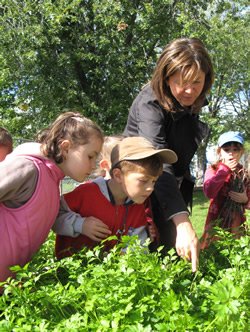
With the recent Quebec student strikes fresh in Canadians’ minds, it is no surprise that education remains a hot topic in Greater Montreal.
On a positive note, the city has progressed in terms of improving high school graduation rates, from 21% dropout in 2007 to 19.1% now, and Quebec overall has, in the past 30 years, made significant inroads in improving post-secondary graduation rates.
Nonetheless, while Greater Montreal is showing some improvement in graduation rates, this year’s report describes Quebec universities as having “disturbing dropout rates.” In 2011, 32.4% of students at Quebec universities dropped out, compared to 14.8% in the rest of Canada.
“It’s a bit of a paradox,” says Boulos. “We’re graduating a lot of students, but at same time a lot of students drop out.”
She says the reasons for this are largely understudied, but suggests possible factors, such as students’ being unable to afford both tuition and living expenses, an inability to find adequate part-time jobs while in school, struggling on the part of students from single-parent families and difficulty experienced by students who experienced a significant high school dropout culture.
She said recommendations to alleviate this problem are, again, to fund supplementary education programs at the high school level, “to better prepare students for post-secondary education.”
Health and access to healthcare
Access to healthcare continues to be problematic in Greater Montreal, particularly on the island. In 2011, 35.1% of Montreal residents didn’t have a family doctor, and of those that did, 33% reported having to wait more than a month for an appointment.
Boulos says the amount of people without a family doctor is likely the highest in all of Canada. She attributes the problem to Quebec’s highly regulated medical system, which places limitations on how many doctors can practice.
Because this is largely a governmental issue, Boulos recommends greater advocacy, in order to help effect policy changes.
Regarding health, a surprising, and relatively new, issue found in Vital Signs is an increase in the number of HIV cases reported among individuals under 30. In 2011, 34% of people who had recently contracted the virus were not yet in their thirties, compared to 20% in 2010.
Boulos says accessibility — and improvements to — HIV medication may be causing young people to be less careful when it comes to sexual protection. She recommends investment in HIV/AIDS prevention and education programs.
Conclusions
In terms of how the problems identified in the report will impact the FGM’s 2012 granting program, Boulos says they will strive to both address the issues through the direction of funds and by actively creating awareness among citizens regarding Greater Montreal’s priority needs.
“Quite frankly, these [poverty, high dropout rates, barriers to healthcare] are huge problems. Poverty is an obstacle to people’s access to food, education, shelter and health, to name a few. The private, public and third sectors need to collaborate more and tackle these problems together. We must address not only how to provide all people with basic access to their basic necessities, but also access to job skills and employment, and how to foster a healthy economy that encourages innovation, investments and jobs.”
Montreal is a dynamic and diverse city, with particular nuances related to language, culture and education. Previous Vital Signs reports prove that the city’s charities, communities and individuals (as well as the government) are generally open to change, and that investment and fundraising can help Montreal make headway in addressing its challenges.
This year’s report illustrates that greater work can and should be done. Not just through the funneling of resources, but by initiating conversations about why certain things are the way they are — like the disproportionately high levels of poverty — and what can be done to change them.
Jodie Shupac is a Toronto-based freelance writer. She contributes to a range of publications, covering culture, urban issues, health and the environment.
Photos (from top) via the Foundation of Greater Montreal. All photos used with permission.
Please note: While we ensure that all links and email addresses are accurate at their publishing date, the quick-changing nature of the web means that some links to other websites and email addresses may no longer be accurate.
