


This article is an excerpt* of Adriana Leigh’s new book, Trauma Sensitivity At Work: How to Lead Safe, Inclusive Teams, published by Page Two Books.
The relationship between trauma and burnout is layered and complex, but one thing is clear: Those who have experienced trauma are often more vulnerable to burnout.
Studies of physicians and nursing students show a clear link between adverse childhood experiences (ACEs) and burnout. Emotional exhaustion—a key element of burnout—is more common in those with unprocessed trauma, and in turn, it makes work stress even harder to manage. Picture someone juggling multiple stressors—experiencing grief over the loss of a loved one, carrying the effects of a volatile childhood, navigating discrimination—all while working a high-pressure job with little control over their workload. Each challenge can chip away at a person’s ability to bounce back. Without time or space to regroup, their capacity to cope erodes, and burnout can take hold.
We also know that some professions increase the risk of burnout. People working in health care or anti-violence advocacy, for example, may face daily exposure to trauma. And this trauma isn’t just occupational—it’s often personal. Imagine someone supporting survivors of gender-based violence who has survived that violence themselves. When the systems they’re trying to change are the very ones that have harmed them, the impact deepens. To top this off, many such organizations grapple with chronic underfunding.
In my experience—and as seen in the example of Mike, Marisol’s supervisor—organizations often place the burden of mental health squarely on the individual. Rather than consider the broader context of the workplace itself, leaders may frame psychological struggles as personal shortcomings or assume employees coping with mental health issues are not cut out for the pressures of challenging work.
At the same time, employees often lack the tools, language, and support to understand trauma and the role it plays in their relationship to work, and so they fail to advocate for themselves. While some are granted medical leave, they’re often left to navigate it without the resources or guidance they need. Many may feel pressured to justify their time away and return before they’re ready—sometimes for financial reasons, sometimes because of workplace expectations. Too often, they come back to the same high-pressure culture, with leaders who remain unequipped to support them, increasing the risks of future burnout, resignation, and ultimately, turnover.
If an organization wants to move toward real healing and well-being, it needs to acknowledge the individual needs and organizational factors that shape employees’ experience of work and contribute to burnout.
In other words, both the individual and the workplace need healing.
What Can Leaders Do?
As a leader, you have a key role to play in breaking this unhealthy cycle, for yourself and your team. However, you need better supplies than Band-Aids. You need to invest in building more trauma-sensitive teams, processes, and cultures, while your organization implements policies in a way that makes it safer for people to come forward when they experience trauma on the job.
In the coming chapters, I will introduce you to tools that will help individuals and workplace policy, process, and culture to become trauma sensitive. For individuals, we’ll explore a values map to see how values look in your everyday actions, and we will use a trauma-sensitive thought record tool to identify and challenge unhelpful thoughts in interactions with your team. We’ll also consider the role of somatics, focusing on bodily reactions and their relationship to environment; we will practice labeling emotions, not people (“I am feeling stress” rather than “I am a stressed-out person”); and we will explore gratitude and affirmation practices.
Tools that we will explore for the workplace include four trauma-informed principles:
- Choice and collaboration
- Trust and transparency
- Safety, security, and well-being
- Cultural humility
We will also consider how to build a more inclusive team using actionable strategies to shift culture, and how to implement policies that follow the SAS (safety, acknowledgment, and support) principles. Finally, we’ll talk about intentional communication, learning to respond rather than react with the 4Rs: regulate, recognize, respond, reflect.
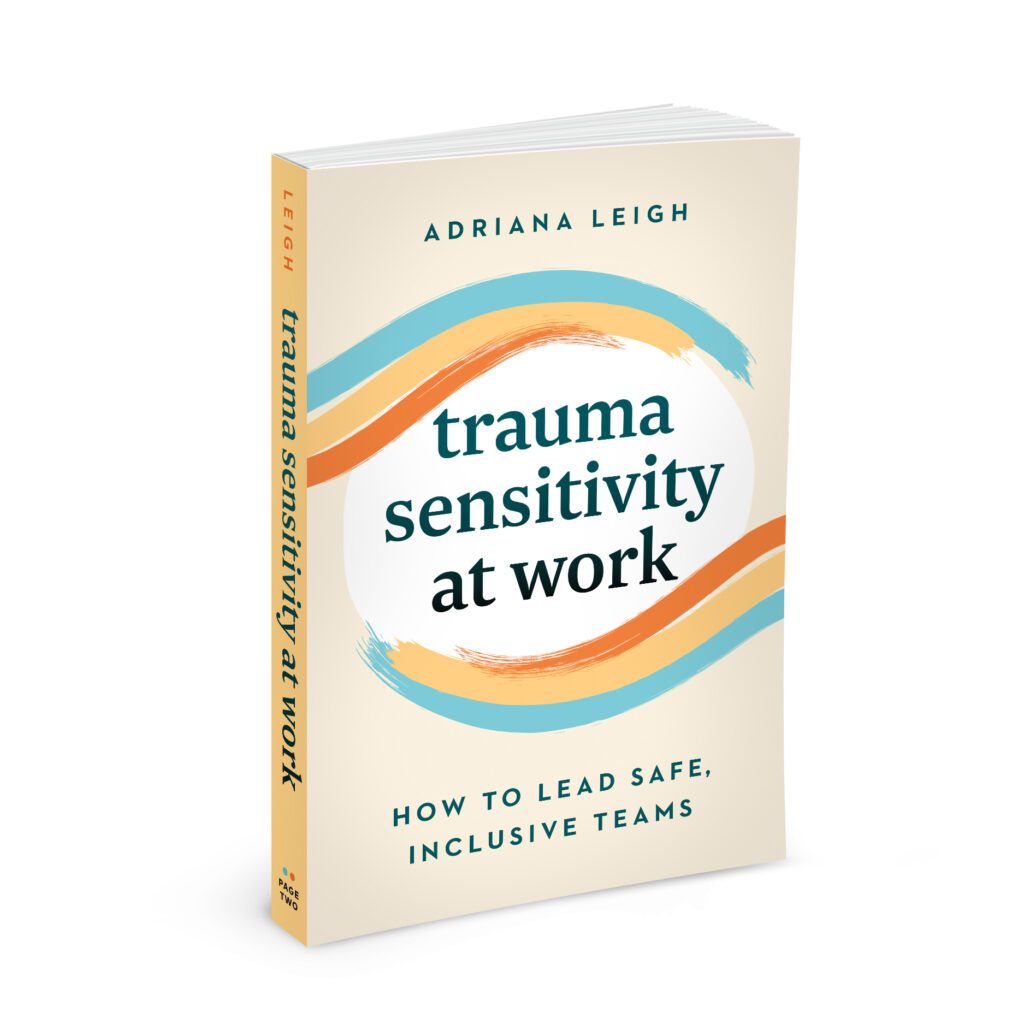
Adriana Leigh is an award-winning international consultant and changemaker, and the founder and principal consultant at ALG Consulting. She is author of Trauma Sensitivity at Work: How to Build Safe, Inclusive Teams (April 2026, Page Two Books).
With over twenty years of global experience, she is a former workplace human rights lawyer turned facilitator, working at the intersection of DEI, gender-based violence and harassment prevention, and psychologically safe workplace systems.
*The excerpt is reproduced with permission from the author. All rights to the content remain with the author. Unauthorized reproduction or distribution beyond the agreed scope is not permitted.
The views expressed in this article are the author’s alone and do not necessarily represent those of CharityVillage.com or any other individual or entity with whom the authors or website may be affiliated. CharityVillage.com is not liable for any content that may be considered offensive, inappropriate, defamatory, or inaccurate or in breach of third-party rights of privacy, copyright, or trademark.
