
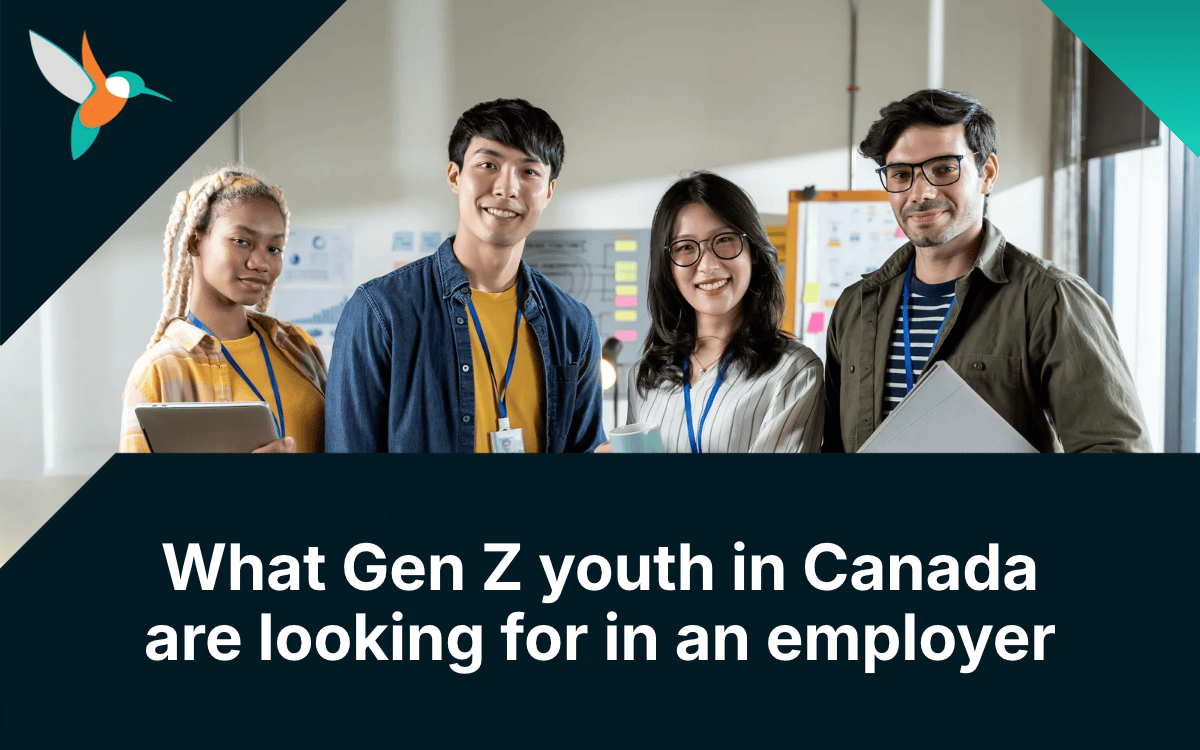

Youth are entering the job market at an incredibly challenging time. Youth unemployment in Canada is at a record high, the cost of living has skyrocketed, and AI threatens to make certain professions obsolete. It is an unsettling time to enter the job market.
As an organization that works with youth, See Different decided to poll groups of young people who completed our DEI certification program about what they are looking for in an employer. Their answers were diverse and deeply personal, ranging from practical (like a living wage) to personal (being treated like a person, not a number).
What these answers highlighted was the need for employers to see young workers not as a means to an end, but as active participants and leaders who are eager to create value and meaning in their work.
A living wage
Unsurprisingly, against the backdrop of rising costs, a living wage is one of the biggest priorities for young people across Canada. Of the youth we surveyed, they shared insights into fair pay, living wages, benefits, bonuses, and earning enough to afford basic necessities, including housing and groceries. One respondent said they’re looking for “enough money to buy a house.”
For young workers with less purchasing power than previous generations, a job isn’t simply about earning money, but about building stability and independence. As one respondent explained, they want to make enough money to “avoid having to choose between rent and food.” These answers are particularly alarming, highlighting the awareness that this generation has about the economic system they are inheriting.
A psychologically safe environment
Another strong theme was remarkably simple: respect. Young workers want employers and coworkers who listen, communicate openly, and treat them with dignity and respect. They want to feel comfortable raising concerns, asking questions, and making mistakes without fear. As one Harvard article explains: “ A culture of error supports psychological safety, a key driver of team performance and well-being.”
Several respondents specifically mentioned wanting kind, approachable, and supportive bosses. This suggests that workplace culture isn’t an extra benefit for young workers, it is a fundamental part of what makes a workplace appealing.
Work-life balance
There is an old adage that if you arrive on time, you’re already late. A toxic sentiment from a previous generation, this mentality no longer resonates with Gen Z. Of the young people we surveyed, they were clear in setting a boundary with work expectations, understanding that overtime should be compensated, and that it shouldn’t consume their entire lives. Work-life balance, reasonable schedules, paid time off and respect for non-working hours appeared repeatedly in their responses.
Gen Z wants employers who understand that employees have lives outside of work, whether that’s family, friends, health, community, or simply time to rest. One response captured the sentiment particularly well: “Being home by supper”. There is a scientific correlation, unsurprisingly, between rest and productivity. The more you rest, the more productive you are at work.
Inclusion can’t be performative
As participants in our DEI certification program, we expected to see diversity, equity and inclusion as themes in our survey. However, youth responses went well beyond simply wanting diverse workplaces.
They mentioned respect for pronouns, religious accommodations, accessibility, neuro-affirming spaces, protection from discrimination, inclusive policies, and meaningful DEI initiatives. One respondent specifically called for “proper DEI” rather than performative efforts. For young workers, inclusion means creating an environment where people can bring their identities to work without having to leave important parts of themselves at the door.
Communication
With good communication coming up repeatedly, it is clear that young workers want clear expectations, healthy communication, constructive feedback, and approachable leadership. They want to know what is expected of them, but they also are looking for employers who are willing to listen when something isn’t working.
Several respondents emphasized the importance of being able to raise concerns and have criticism taken seriously. Communication, in other words, needs to go both ways.
An opportunity to learn and grow
Another recurring theme was professional development. A lot of young people find themselves stuck in a trap: not enough experience to qualify for the job, and only enough experience to do the same job somewhere else. So how do they advance? Young people want extensive training, mentorship, internships, and opportunities to develop their skillset and grow within an organization.
They are tired of the assumption that they must know everything immediately. In fact, several responses emphasized the importance of being given space to learn without judgment. For employers, this is an important reminder: hiring someone at an entry level should mean helping them develop, not expecting them to arrive fully formed.
They want a future, not just a job
Perhaps the biggest takeaway from the responses to our poll is that young people are looking for long-term stability. With so much societal instability and uncertainty, from a tariff war to climate change and AI, Gen Z is looking for reliability: benefits, pensions, career growth and security. At the same time, stability does not mean settling for work without purpose. Young people also want meaningful work that creates change and allows them to see the impact of their contributions. As one respondent put it, they want to be “doing something that really matters and seeing the effects of what I do.”
So, what does Gen Z want from employers?
The answers from these young people point to something bigger than a list of workplace perks. They want fair pay, respect, flexibility, inclusion, communication, opportunities to learn and a sense of security. They want to be treated like people, not numbers. And, perhaps, most importantly, they want a workplace that allows them to build a life outside of work as well as within it.
The expectations of young workers are changing, but many of their priorities aren’t complicated. They want to be paid fairly, treated with respect, supported in their growth and given the opportunity to contribute to something meaningful. For employers looking to attract and retain the next generation, those aren’t just nice-to-haves. They’re the foundation of a workplace where young people can thrive.
This article is based on responses from youth who completed our DEI certification program. The responses reflect the perspectives of these participants and should not be understood as representative of all Gen Z youth in Canada.
By: See Different, A National Youth Education Initiative of CCDI
The views expressed in this article are the author’s alone and do not necessarily represent those of CharityVillage.com or any other individual or entity with whom the authors or website may be affiliated. CharityVillage.com is not liable for any content that may be considered offensive, inappropriate, defamatory, or inaccurate or in breach of third-party rights of privacy, copyright, or trademark.
